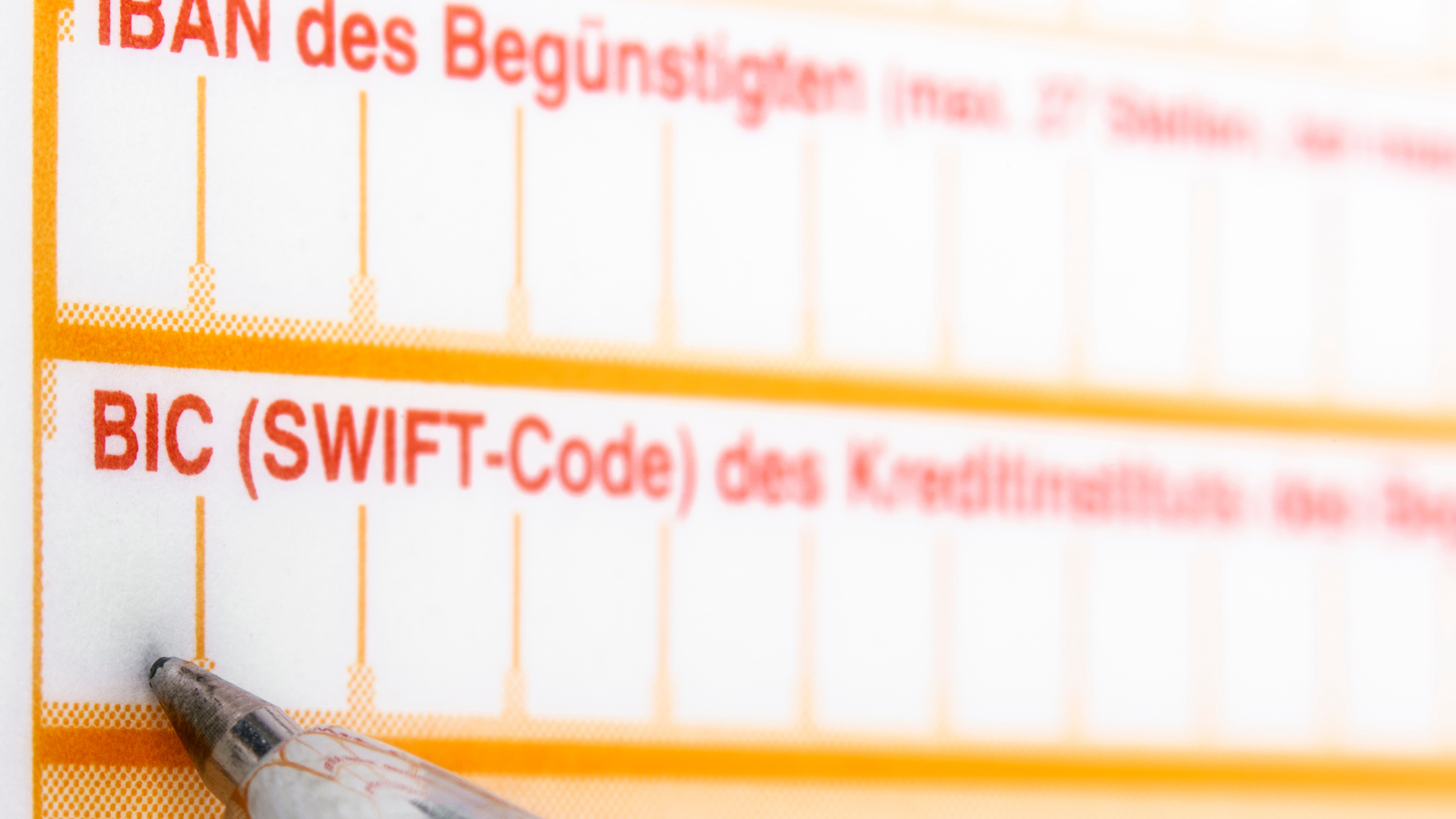
If you make international payments, receive money from abroad, or work with global financial operations, understanding these banking codes is essential to ensure fast, secure, and error-free transactions.
In this article, we’ll break down the main codes used in international financial transactions and explain how they work in practice.
What Are International Banking Codes?
International banking codes work like “addresses” for financial institutions around the world. They identify banks, branches, and accounts in a standardized way, allowing money to reach the correct destination even in transactions between different countries.
These codes are essential for:
- International transfers
- Receiving money from abroad
- Global payments
- International purchases
- Foreign exchange operations
- Digital business and international e-commerce
Without the correct information, a transfer may be delayed, returned, or even generate additional fees.
SWIFT: The Passport of International Transfers
The SWIFT code, also known as a BIC (Bank Identifier Code), is one of the most widely used systems in the world for identifying banks in international operations.
It works as a unique identifier for a financial institution within the global banking network.
How Is a SWIFT Code Structured?
A SWIFT code usually contains between 8 and 11 characters:
- 4 letters: bank identification
- 2 letters: country
- 2 characters: location
- 3 optional characters: branch
Example:
AAAA BR BB XXX
This code tells the system exactly which bank will receive the funds.
When Is SWIFT Used?
SWIFT is mainly used for:
- International wire transfers
- Business remittances
- Foreign currency payments
- Global fund transfers
- IBAN: Identifying International Bank Accounts
The IBAN (International Bank Account Number) is an international standard created to identify bank accounts in many countries.
While SWIFT identifies the bank, the IBAN identifies the beneficiary’s account.
How Does IBAN Work?
The number format varies by country, but it generally includes:
- Country code
- Verification digits
- Bank code
- Account number
Example:
GB29 NWBK 6016 1331 9268 19
Each country has its own specific IBAN structure.
Where Is IBAN Most Commonly Used?
IBAN is widely used in:
- European countries
- International transfers between European banks
- Global financial operations
In Brazil, not all banks use IBAN as a primary standard, but it may still be required for international transactions.
ABA and Routing Number: U.S. Banking Codes
In the United States, banking systems use specific codes called ABA or Routing Numbers.
These codes identify banks and financial institutions within the American banking system.
What’s the Difference?
In practice, the terms are often used interchangeably.
These codes contain 9 digits and are commonly used for:
- Domestic U.S. transfers
- Wire transfers
- Electronic payments
- Direct deposits
Sort Code: The United Kingdom Banking Identifier
The Sort Code is used in the United Kingdom to identify banks and branches.
It consists of 6 digits separated into pairs.
Example:
12-34-56
This code is widely used for:
- Local UK transfers
- Domestic payments
- British banking operations
Why Are These Codes So Important?
In an increasingly connected global market, mistakes in banking information can cause:
- Payment delays
- Extra costs
- Transaction cancellations
- Failures in receiving international funds
That’s why understanding each code helps businesses and customers perform global operations more securely and efficiently.
How to Avoid Errors in International Transfers
Before sending money to another country:
- Confirm the beneficiary’s information
- Verify the SWIFT code correctly
- Check whether the destination country requires an IBAN
- Review account and branch numbers carefully
- Consult your digital bank before completing the transaction
Small details make a huge difference in global financial operations.
The Future of International Transactions
With the growth of digital banks and fintech companies, international transfers are becoming faster, more accessible, and more transparent.
Even with new technologies emerging, banking codes remain fundamental to ensuring security and standardization in global financial operations.
Understanding SWIFT, IBAN, and other identifiers is more than simply learning banking terms — it’s about mastering the language of the international financial system.
International banking codes are essential for connecting people, businesses, and financial institutions worldwide.
SWIFT identifies banks. IBAN identifies accounts. ABA, Routing Numbers, and Sort Codes support operations in specific countries.
By understanding how each one works, your international transactions become simpler, safer, and more efficient.
And in an increasingly globalized world, financial knowledge is also a form of power.


